Updated : corrected scope and source wording. Original publication date retained above.
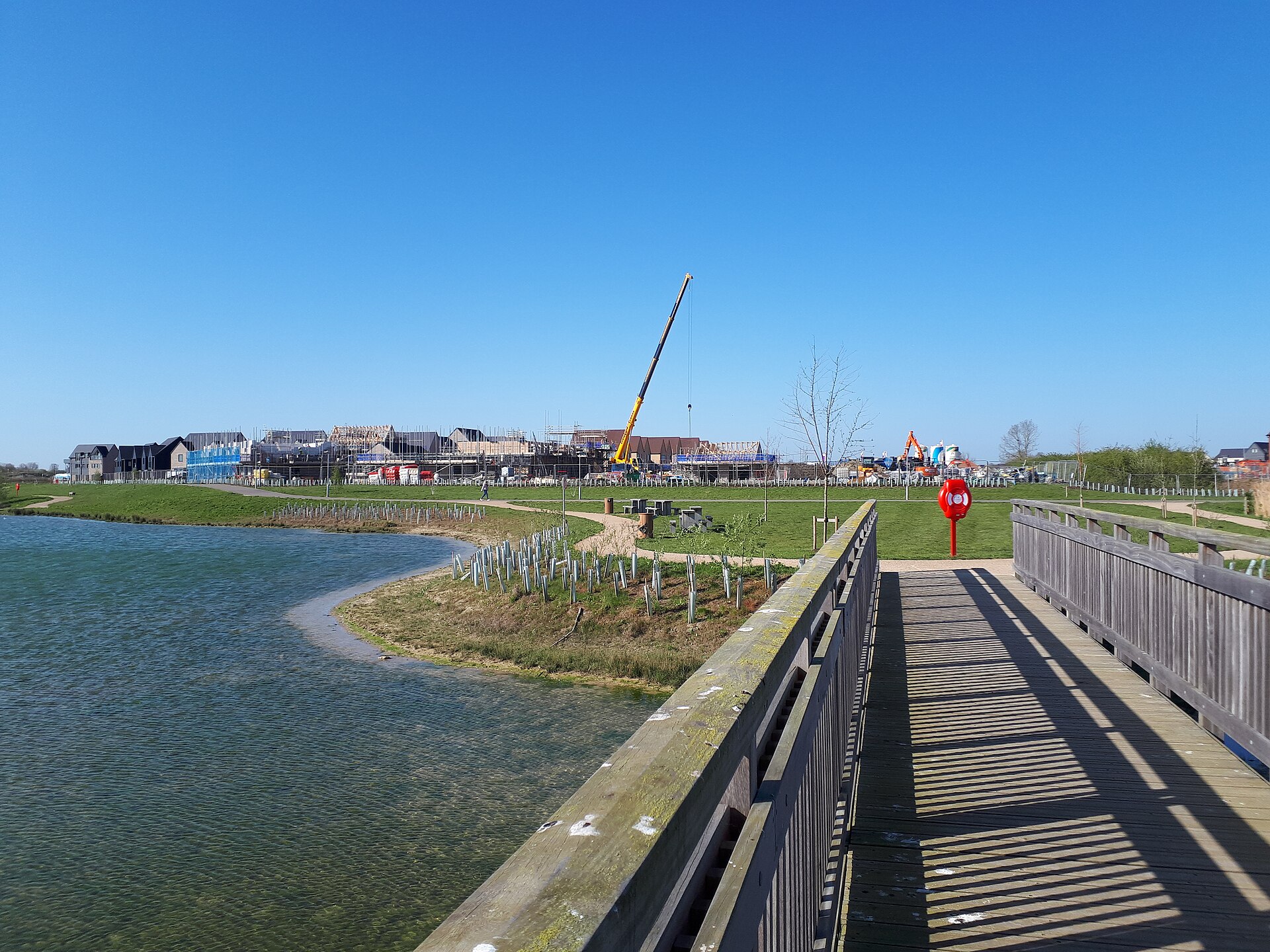
Photo: Hugh Venables via Wikimedia Commons · CC BY-SA 2.0
From 1 October 2026, the Building Safety Levy applies to chargeable residential development in England. The Building Safety Levy applies to residential development of 10 dwellings or more, is calculated on chargeable floorspace, is collected by local authorities, and is designed to raise about £3.4 billion over ten years for building safety remediation. A key completion-stage requirement: if it isn't paid, the building control completion certificate is withheld. Non-payment can block the relevant building control completion or final certificate.
- 1 Oct 2026the levy comes into operation
- ~£3.4bnthe amount it is expected to raise over ten years
- 10+dwellings: the threshold that triggers it (30+ bedspaces for purpose-built student accommodation)
- £24.80/m²Tendring's rate; £100.35/m² in Kensington and Chelsea
- 50%the discount for previously developed (brownfield) land
- ~£3,000per plot: HBF's estimate of the added cost to home builders
What the levy is
The levy is a tax on new residential buildings, enabled by the Building Safety Act 2022 and set out in the Building Safety Levy (England) Regulations 2025, which were made on 19 November 2025. Minor amending regulations were laid in July 2026. The income, net of administration costs, goes to central government and must be spent on building safety: the stated purpose is fixing building safety defects across England.
It applies to England only. Scotland plans its own, separate levy from 1 April 2027.
The charge is triggered by the building control process, not the planning process. The client named on an application for building control approval, an initial notice, or a higher-risk building application to the Building Safety Regulator is liable. Payment is due before completion of the building work or occupation of the building, whichever is earlier, and it goes to the local authority for the area the building sits in, whatever route the building control work took.
Who pays, and what it costs
Liability attaches to the client on the application. That is the developer, in most cases, and there is no passing the buck: the regulations define the client tightly, and the name on the application is the name on the bill.
The rates are set per local authority area in the regulations, weighted by average house prices. There is no single national rate. The published range is stark: about £13 to £16 per square metre in Burnley, £24.80 in Tendring, £100.35 in Kensington and Chelsea. The chargeable area is gross internal area, measured to the RICS Code of Measuring Practice, and it includes communal space. Stairways, lobbies, landings and plant rooms in a block of chargeable flats are chargeable floorspace. For an apartment scheme, the levy lands on space that can't be sold.
A simple worked example from the published rates: 75 m² times £24.80 comes to £1,860 in Tendring. The same flat in Kensington and Chelsea, at £100.35 a square metre, comes to £7,526.25. Multiply across a 50-flat block with its lobbies and plant rooms, and the figure starts to matter to scheme viability.
There is one significant discount. Development on previously developed land, brownfield, is charged at half the standard rate. The discount applies automatically to permitted development rights schemes, and otherwise where at least 75% of the land within the planning permission redline meets the definition.
The 10-dwelling threshold, and the exemptions
The levy bites on major residential development: 10 new dwellings or more, or 30 or more new bedspaces in purpose-built student accommodation. Smaller schemes are exempt.
The threshold cannot be gamed. If the planning permission is for a major residential development, splitting the building control applications into batches under 10 dwellings does not dodge the charge, and the same applies to multiple clients building out one permission.
The levy is not just new-build. Conversions and changes of use to residential are chargeable on the net additional floorspace: an office block turned into 25 flats pays on those 25.
The exemptions matter more than the threshold. Social housing is exempt, including shared ownership and First Homes sold at no more than 70% of market value. Social housing delivered through a section 106 obligation is exempt regardless of who builds it. Supported housing is exempt. So are care homes, hospitals, schools, hotels, hostels, prisons and the other uses listed in Schedule 1 of the regulations. And a non-profit registered provider of social housing, or its wholly owned subsidiary, is an exempt person: everything they build is exempt, full stop. A joint venture is only exempt if every party to it is exempt.
Mixed schemes are where the calculation gets real. A block of 14 flats with 9 social homes and 5 for market sale pays the levy on the 5 market flats and the communal space serving them, apportioned by floorspace.
What happens if you don't pay
The levy is a hard gate, not a soft debt. A building control authority must not issue a completion certificate while the levy is unpaid, and for projects using a registered building control approver, the local authority must reject the final certificate. The direct sanction is the withholding of a completion certificate or rejection of a final certificate. Occupation restrictions and the effect on handover, practical completion or finance depend on the applicable building control regime and contractual terms.
The client also has to confirm at completion that the levy has been paid, or that a notice of no charge was issued. If a scheme changes materially, the authority recalculates and issues a revised liability notice. Get the floorspace wrong in the original application and the correction lands at the point of maximum pressure, with the completion certificate hanging on it.
The levy is a hard gate, not a soft debt. Non-payment can block the relevant building control completion or final certificate.
The 1 October line in the sand
Applications for building control approval submitted before 1 October 2026 are not liable, and varying an existing application after that date does not trigger the charge. But an application submitted before 1 October that is rejected and resubmitted after it is liable. The sensible reading: schemes already in the system are safe, and everything else should assume the levy applies.
The industry argument
The Home Builders Federation opposes the levy and has called for it to be suspended. Its case: home builders have already committed around £6 billion to building safety, through a 4 percentage point corporation tax surcharge (worth about £2 billion), a voluntary self-remediation pledge covering over 50 builders, and reimbursements of £700 million to government funds. The Public Accounts Committee has asked why one sector should fund the bulk of more than £9 billion of remediation costs while product manufacturers and overseas developers carry nothing. HBF puts the average added cost at about £3,000 per plot and argues the timing, due before the first completion certificate on a development, hits small builders when their cash flow is at its worst.
The government's position is that the levy is needed to fund remediation, and that rates are weighted so lower-value areas pay less. Both positions are arguable. The charge itself is not.
What this means for your records
The levy is a floorspace tax. Every element of the calculation runs off your drawings and area schedules: the gross internal area of each dwelling, the communal space, the apportionment between chargeable and exempt units, the brownfield status of the site. The regulations measure floorspace to the RICS Code of Measuring Practice, and the authority calculates the charge from what you submitted for building control.
If the drawings are wrong, one of two things happens. You overpay, and the money is gone until a refund runs through the authority. Or you under-declare, and a revised liability notice lands at the point where the completion certificate is on the line. Either way it's a delay you didn't budget for.
The calculation is only as good as the floor plans it starts from. That makes it a records problem first, and a tax problem second.
For practical next steps, see drawing register checklist, handover pack guide.
Your records either answer the regulator's question or they don't.
At Quantara Data we process, structure and validate building records, drawing registers and floor plans so the source information and gaps are visible for review. Measurement and levy liability need to be checked by the responsible project team. If you're developing in England, get the floorspace data right before the application goes in.
Sources
- GOV.UK, levy advice for developers. Completion-stage payment evidence and building control procedures.
- GOV.UK, Building Safety Levy guidance, Section 1: Introduction, updated July 2026. Supports: levy in force 1 October 2026; SI 2025/1236 made 19 November 2025; amendment regulations laid 2 July 2026; collected by local authorities; charged on building control applications; due before completion or occupation; England only; the "client" is liable; exempt persons; charging conditions; social housing and supported housing exemptions; Schedule 1 exclusions; Scotland's separate levy from 1 April 2027.
- GOV.UK, Building Safety Levy guidance, Section 2: Levy rates and calculations, updated July 2026. Supports: rates per local authority area in Schedule 3, weighted by average house prices; previously developed land rate at 50%; permitted development rights charged at the PDL rate; 75% redline test; floorspace measured as gross internal area per RICS Code of Measuring Practice; communal areas chargeable with apportionment; conversions and reconfigurations chargeable on net additional floorspace.
- Legislation.gov.uk, Building Safety Levy (England) Regulations 2025 (SI 2025/1236). Supports: statutory basis for the levy, rates, exemptions and collection.
- Charles Russell Speechlys, "Building Safety Levy: What Do the Proposed 2026 Amendments Mean?", August 2026. Supports: £100.35/m² Kensington and Chelsea; £13 to £16/m² Burnley; ~£3.4 billion over ten years for remediation; completion certificate withheld for non-payment.
- Tendring District Council, "The Building Safety Levy". Supports: £24.80/m² rate for Tendring.
- Home Builders Federation, "HBF explains... the Building Safety Levy". Supports: HBF opposition and suspension call; ~£6 billion industry commitments (£2bn corporation tax surcharge, £3.3bn self-remediation pledge, £700m reimbursements); £3,000 per plot average added cost; levy due before first completion certificate; brownfield rate half the greenfield rate; communal space charged on unsaleable area; Public Accounts Committee fairness point; £9.4bn remediation costs.
- GOV.UK, Building Safety Levy technical consultation response, 24 March 2025. Supports: completion certificate must not be issued while levy unpaid; RBCA final certificates rejected; refunds within two weeks of revised liability notice.
- Womble Bond Dickinson, "Building Safety Levy: a new era for construction in England", 8 December 2025. Supports: non-payment affects occupation, practical completion, refinancing and exit strategies; funders' exposure.
- Brady Solicitors, "Building Safety Levy 2026 Explained", 23 June 2026. Supports: charge per square metre of chargeable floorspace measured as GIA under the RICS Code of Measuring Practice; splitting applications does not work under a single permission.
- Gowling WLG, "UK Building Safety Levy explained", 24 September 2025. Supports: applications before 1 October 2026 not subject to the levy unless later rejected.
- Legislation.gov.uk, Draft Building Safety Levy (Amendment) (England) Regulations 2026. Supports: minor amendments laid 2 July 2026.
- Scottish Government, Building Safety Levy. Supports: separate Scottish levy planned from 1 April 2027.