Updated : corrected scope and source wording. Original publication date retained above.
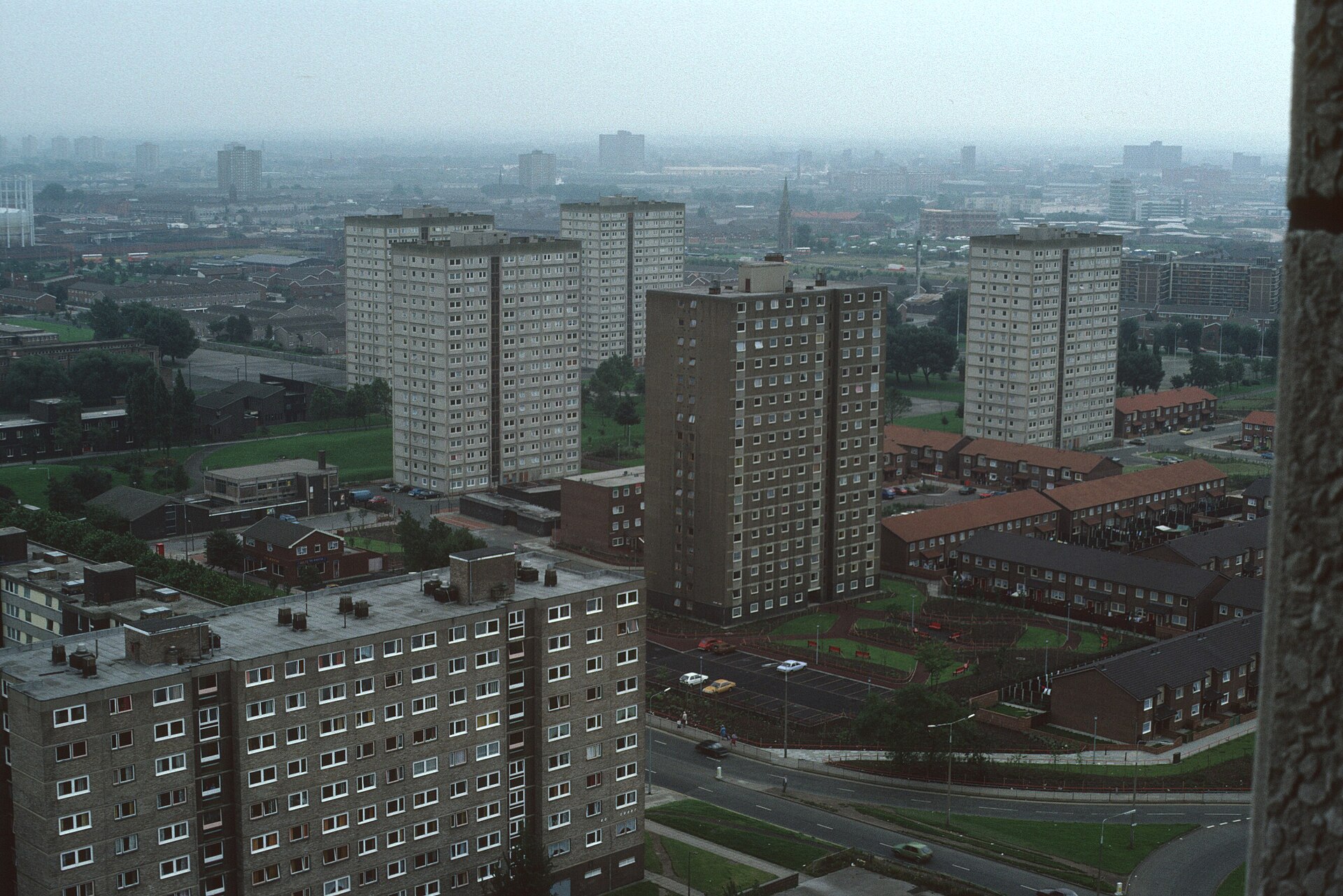
Photo: Miles Glendinning via Wikimedia Commons · CC BY 4.0
After Grenfell, the government had to find out what the country's buildings were made of, and it couldn't. A building-by-building survey eventually found 486 high-rise residential buildings over 18 metres clad in ACM, the same cladding system at the centre of the Grenfell fire. Before that survey, no central record of which buildings had it existed; finding out took a building-by-building effort. The golden thread exists so that the question never goes unanswered again, and the Building Safety Regulator is now testing who can answer it.
- 486high-rise residential buildings found with ACM cladding, identified only after a post-Grenfell building-by-building survey (MHCLG, April 2022)
- 66%of Building Assessment Certificate applications refused so far in 2026 (BSR, July 2026)
- ~2,000buildings directed to apply for a certificate since April 2024
- 28 daysto submit once directed, or commit an offence
- 1High Court injunction preventing occupation of a higher-risk building, August 2025
- 2 yearsmaximum imprisonment for key offences under the Building Safety Act
Why the golden thread exists
The duty comes from the Building Safety Act 2022 and the regulations made under it. During design and construction, the client must hold golden thread information in an electronic facility, kept secure and accurate, with change control that records who changed what and when. Regulation 31 of the 2023 procedures regulations makes clear that "previous versions of any document which has been updated" are part of the thread. Regulation 38 says the whole thing is handed over at completion, filing structure intact.
In occupation it's section 88. The accountable person must keep prescribed information to prescribed standards, keep it up to date so far as possible, and obtain any of it they don't hold, except where that isn't practicable. That last clause is the one to sit with. It makes the duty deliberately retrospective: qualifying occupied buildings can be in scope even if they predate the Act. The duty to obtain missing prescribed information is subject to practicability.
The Grenfell Inquiry's phase 2 report showed why that burden exists. The refurbishment's fire safety strategy was left in draft and incomplete. Building control never obtained full information on the construction. The building's manager relied on fire risk assessments carried out by a single unqualified individual and kept no usable record of vulnerable residents needing help to evacuate. None of that was exotic. All of it was information that should have existed.
The teeth are real, and they've started biting
Enforcement is not limited to criminal prosecution. The relevant statutory powers also include compliance notices and action where building safety risks require intervention.
The regulator's powers under Part 4 include compliance notices and urgent action notices where there is imminent danger. Section 101 makes it an offence for an accountable person's contravention to put people at critical risk. Contravening a compliance notice is itself an offence. Penalties run up to two years on indictment, and occupying an unregistered building carries a continuing daily fine on top.
The powers are being used. In August 2025 the HSE, acting for the BSR, obtained a without-notice High Court injunction preventing occupation of Deakin's Yard over serious fire safety defects. Since April 2024 the BSR has directed accountable persons for nearly 2,000 buildings to apply for building assessment certificates. This year, 66% of applications have been refused. The clock is 28 days from the direction, and missing it without a reasonable excuse is an offence. The 290 investigations and 45 enforcement actions we covered last edition were the first phase. The assessment pipeline is the second.
What ignoring it costs you
The refusal rate is where it gets personal. The BSR has said applicants show "process compliance rather than effective management of safety", that resident-managed companies "have struggled", and that refusals have produced "added or unforeseen costs being passed on to residents". That's the regulator conceding the burden is real, and it lands hardest on resident-led buildings, where the management company is run by volunteers.
Here's the honest version of the choice. Do the work once, properly, and the cost is bounded. Get refused, and you're back in the application queue with the same records to fix under a harder spotlight. The BSR has admitted determination times are running twice as long as first expected, so the queue is not quick. An accountable person can be an individual or an organisation. Liability depends on the relevant offence and the facts; it is not automatically personal liability for the named contact.
An accountable person can be an individual or an organisation. The named contact is not automatically the accountable person.
What good looks like, and the move
The BSR's own description of a working golden thread is a single source of truth, kept digitally, available to the people who need it when they need it. Version control matters, and so does the audit trail. For legacy buildings the standard is reasonable enquiries: the regulator doesn't expect the impossible, but it does expect you to have looked, and to hold what you found.
Review the information needed for the occupation duty under section 88 before a building assessment direction arrives. Regulation 31 concerns the construction-stage golden thread; it is not a universal checklist for every occupied building.
The regime is still tightening. The BSR's updated resources are expected in September 2026, and the Building Safety Levy arrives on 1 October 2026. The records that survive that test take time to assemble. Start before the letter lands, not after.
The regime timeline
For practical next steps, see golden thread building safety requirements, existing-building records guide.
Your records either answer the regulator's question or they don't.
At Quantara Data we process, structure and validate golden thread records so yours do. If you're a dutyholder or accountable person, get the records in order before the letter lands.
Sources
- GOV.UK, accountable persons. Accountable persons may be individuals or organisations; a named contact does not automatically hold the role.
- MHCLG, Building Safety Programme monthly data release, April 2022 (PDF). Supports: 486 high-rise residential buildings with ACM cladding identified by the post-Grenfell survey.
- GOV.UK, "BSR to introduce more proportionate and targeted approach for higher-risk building assessments", 9 July 2026. Supports: nearly 2,000 buildings directed since April 2024; 66% of BAC applications refused in 2026; determination times twice as long as expected; resident-managed companies struggling; costs passed to residents; "process compliance" quote; updated resources expected September 2026.
- Making Buildings Safer (campaign.gov.uk), "Building Assessment Certificates for higher-risk buildings", May 2026. Supports: 28-day submission clock; failure to apply an offence.
- Gowling WLG, "Enforcement powers of the Building Safety Regulator", 12 March 2026. Supports: HSE for the BSR v Integritas Property Group Ltd injunction (August 2025, occupation prevented); BSR became an independent statutory body on 27 January 2026.
- Legislation.gov.uk, Building Safety Act 2022, s.77, s.88, s.99, s.101. Supports: s.88 occupation golden thread including s.88(3) retrospective duty; s.77 unregistered-occupation offence with penalties; compliance notices; critical-risk offence under s.101.
- Legislation.gov.uk, The Building (Higher-Risk Buildings Procedures) (England) Regulations 2023 (SI 2023/909), Part 4. Supports: reg 31 golden thread information including previous versions and change control; reg 38 handover at completion.
- GOV.UK, "Grenfell Tower Inquiry Phase 2 report: government response", 26 February 2025. Supports: draft fire safety strategy; building control failure to obtain full information; single unqualified assessor; vulnerable-resident records.
- Making Buildings Safer (campaign.gov.uk), "Understanding the golden thread", updated 21 March 2026. Supports: BSR's description of the golden thread (single source of truth, digital, available when needed); reasonable enquiries for legacy buildings.
- Construction Management, "First BSR prosecution 'only a matter of time' says Hackitt", 3 December 2024. Historical commentary from December 2024; it does not establish the prosecution position in August 2026.
- GOV.UK, "Building Safety Levy guidance", 2026. Supports: levy comes into operation 1 October 2026.
- Construction News, "Thousands of higher-risk buildings registered after October 2023 deadline", 16 March 2026. Supports: 290 investigations and 45 enforcement actions (continuity figures from edition #1).