Updated : corrected scope and source wording. Original publication date retained above.
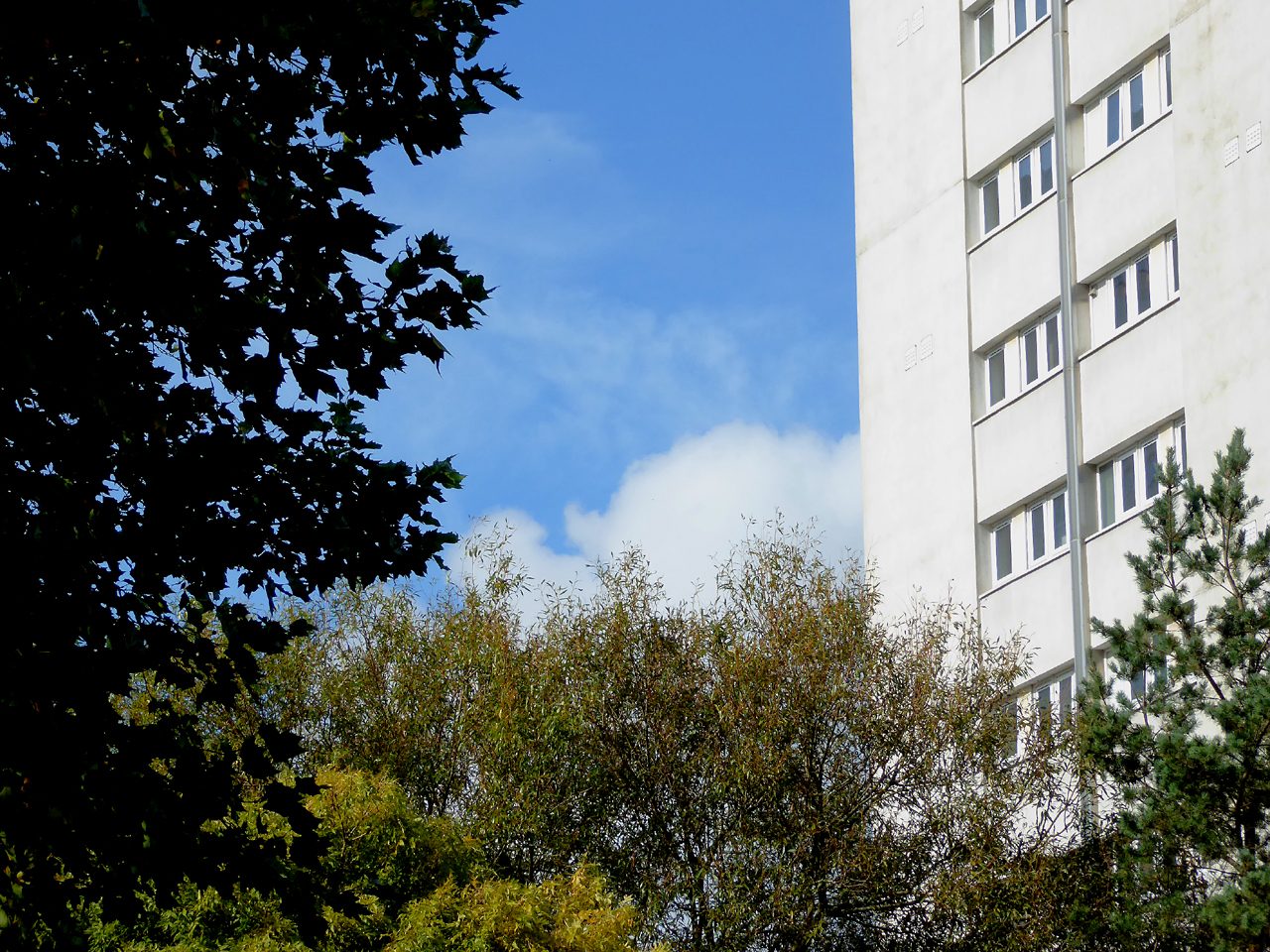
Photo: Roger Kidd via Wikimedia Commons · CC BY-SA 2.0
3,563 higher-risk buildings in England registered after the legal deadline. The regulator has opened 290 investigations into buildings that didn't register properly, and 45 of those ended in enforcement action. Registration was the front door. The golden thread is the long game.
- ~12,500higher-risk buildings estimated in scope (government estimate, April 2020)
- 3,563buildings registered after the 1 October 2023 deadline (FOI data, March 2026)
- 290investigations into buildings that didn't register properly
- 45enforcement actions so far
The front door: registration
Under section 77 of the Building Safety Act 2022, the principal accountable person commits an offence if an occupied higher-risk building is not registered, subject to the statutory defence. The existing-building registration deadline was 1 October 2023. A higher-risk building, for these purposes, is at least 18 metres tall or at least seven storeys, with at least two residential units, subject to the statutory exclusions. Owners and accountable persons had from 6 April 2023, when the register opened, until 30 September 2023 to get registered.
The Health and Safety Executive, which hosted the Building Safety Regulator at the time of the estimate, estimated around 12,500 buildings in England were in scope. That estimate traces back to government figures from April 2020, and the regulator repeated it in May 2023 when only 750 buildings had registered.
The gap between expectation and reality
In March 2026, Construction News published data obtained through a Freedom of Information request. The headline figure: 3,563 occupied higher-risk buildings completed registration after the 1 October 2023 deadline.
The same FOI response showed 290 cases investigated after owners failed to register, including incomplete applications where key building information was never submitted on time. 45 of those cases resulted in enforcement action.
The regulator could not say, in its FOI response, how many occupied higher-risk buildings in England remain unregistered. It also could not say how many of the 3,563 late registrations had started the process before the deadline. The FOI response therefore does not establish the total number still unregistered.
What the regulator does about it
The BSR's position, confirmed in its response to Construction News: it holds a register with each building's principal accountable person, height, floor count, construction date and more. It works with local authorities and fire and rescue services to cross-reference data and identify high-rise residential buildings that evaded registration. It can issue fines and prosecute responsible parties.
That is not theoretical. Since the Building Assessment Certificate process began in April 2024, the BSR has directed accountable persons to apply for certificates for nearly 2,000 buildings. More than 1,400 directions went out in 2024/25 alone, and the first certificate was issued in January 2025. Once directed, you have 28 days to submit your application, including the safety case report. Failure to apply without a reasonable excuse is an offence.
The directions are going out in waves, prioritising the buildings with the most significant risks first. If yours hasn't been called yet, the question is when, not if.
If yours hasn't been called yet, the question is when, not if.
The golden thread timeline
Where the golden thread fits
Registration was the front door. The golden thread is the duty that keeps running afterwards.
For building work, Regulation 31 of the Building (Higher-Risk Buildings Procedures) (England) Regulations 2023 defines golden thread information, including previous versions of updated documents. The occupation duty is separate: section 88 of the Building Safety Act 2022 requires accountable persons to keep prescribed information up to date and obtain missing information where practicable.
The Construction Leadership Council's guidance for dutyholders and accountable persons, published August 2024, is the practical playbook. It sets out what good looks like: structured records, version control, clear ownership of information, and records that survive staff changes and contract handovers.
The regulator's own description is simpler. Having a golden thread means those responsible have easily accessible, reliable, up to date and accurate information about the building. When the BSR calls your building in, that is what gets tested.
What "what happens now" actually looks like
Three things are converging.
First, the register is being reconciled. Cross-referencing with council and fire service data means late registrations and evasions are surfacing. 45 enforcement actions so far, out of 290 investigations, and the regulator has said it can now identify buildings that evaded registration. The HSE's Chief Inspector of Buildings described 2024 as the shift from groundwork to meaningful action.
Second, the assessment pipeline is ramping. Nearly 2,000 buildings directed in just over two years, each with a 28-day clock. The safety case report sits at the centre of every application, and you cannot write a credible safety case report if the underlying records are scattered or missing.
Third, the golden thread is a legal duty with a paper trail. Dutyholders have to demonstrate they hold the right information, in the right form, and that it stays right. That demonstration is a records problem before it is anything else.
What good looks like, and where the paperwork breaks
Common records problems are straightforward to recognise. Files sit in inboxes, registers live in spreadsheets only one person understands, O&M manuals arrive a year late, and fire safety records were never indexed in the first place. These issues can make safety information harder to find and assess.
Good golden thread information is structured, indexed, version-controlled and complete enough to answer a regulator's question on a 28-day clock. It's boring on purpose, and that's the point.
If you're a dutyholder or accountable person for a higher-risk building, the question isn't whether you'll be asked. It's whether your records can answer when the letter lands.
For practical next steps, see building safety document checklist, safety case report guide.
Your records either answer the regulator's question or they don't.
At Quantara Data we process, structure and validate golden thread records so yours do. If your building is on the register, or should be, get the records in order before the letter lands.
Sources
- Building Safety Act 2022, section 77. Registration offence and statutory defence.
- Building Safety Act 2022, section 88. Occupation-stage information duties and the practicability qualification.
- Construction News, "Thousands of higher-risk buildings registered after October 2023 deadline", 16 March 2026. Supports: 3,563 late registrations; 290 investigations; 45 enforcement actions; BSR statement on cross-referencing with local authorities and fire services; register opened 6 April 2023.
- Trowers & Hamlins, "Building safety regime for registration of existing higher-risk buildings goes live", April 2023. Supports: ~12,500 existing HRBs; registration required by 1 October 2023; register opened 6 April 2023.
- CMS Law, "2 Week Reminder: deadline to register higher-risk occupied buildings", 18 September 2023. Supports: BSR's May 2023 estimate of 12,500 HRBs, of which only 750 registered at that point.
- Travers Smith, "Don't miss the deadline for registering high-rise residential buildings". Supports: criminal offence to occupy unregistered HRB after 1 October 2023; HRB definition (18m or 7 storeys); key building information required at registration.
- GOV.UK, "BSR to introduce more proportionate and targeted approach for higher-risk building assessments", 9 July 2026. Supports: nearly 2,000 buildings directed since the BAC process started in April 2024.
- Making Buildings Safer (campaign.gov.uk), "Building Assessment Certificates for higher-risk buildings", May 2026. Supports: more than 1,400 PAPs directed in 2024/25; first certificate issued January 2025.
- Wedlake Bell, "Building Safety Act 2022 (BSA): Building safety cases and reports". Supports: 28 days to submit BAC application once directed; offence under s79(3) for failure.
- Legislation.gov.uk, The Building (Higher-Risk Buildings Procedures) (England) Regulations 2023 (SI 2023/909), Part 4, reg 31. Supports: legal definition of golden thread information; in force 1 October 2023.
- Construction Leadership Council, "Delivering the Golden Thread: Guidance for dutyholders and accountable persons", August 2024 (PDF). Supports: practical golden thread requirements for dutyholders and accountable persons.
- Making Buildings Safer (campaign.gov.uk), "Understanding the golden thread", 21 March 2026. Supports: BSR's own description of the golden thread.
- Building Engineer, "HSE Chief Inspector of Buildings cites 2024 as 'defining year' for building safety", 14 February 2025. Supports: Philip White's "shift from groundwork to meaningful action" framing.